We are renovating this page currently!
Art &
Poetry
My artistic practice has never been separate from my facilitation work. They’re the same impulse expressed through different channels. For me, art is a way of breaking open convention so that hidden forms and forces can be released. A way to coax unlikeliness into novelty and a way to peel back reality to reveal new paradigms. Whether it’s painting, poetry, or facilitating transformative group experiences, I’m always asking some form of this question:
Can we survive the terrifying beauty of who we really are?
Can I survive the terrifying beauty of who I really am?
Can you survive the terrifying beauty of who you really are?
Can we survive the terrifying beauty of who we really are?
Can I survive the terrifying beauty of who I really am?
Can you survive the terrifying beauty of who you really are?
The first time I won a prize as an artist I was about 6 years old. It was a cupcake decorating contest! I made this animation in 2009 about that moment, and about the magical world of creativity that my mother Venetia facilitated for my brother and I.
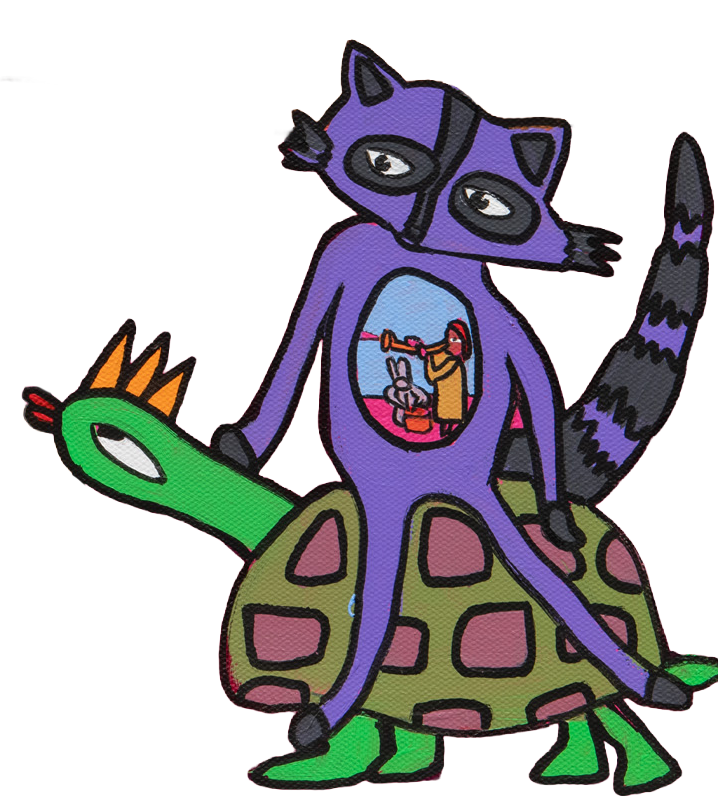
I became really interested in animation after that and made a bunch of weird little things like this silent piece called A Taste for Life in 2010
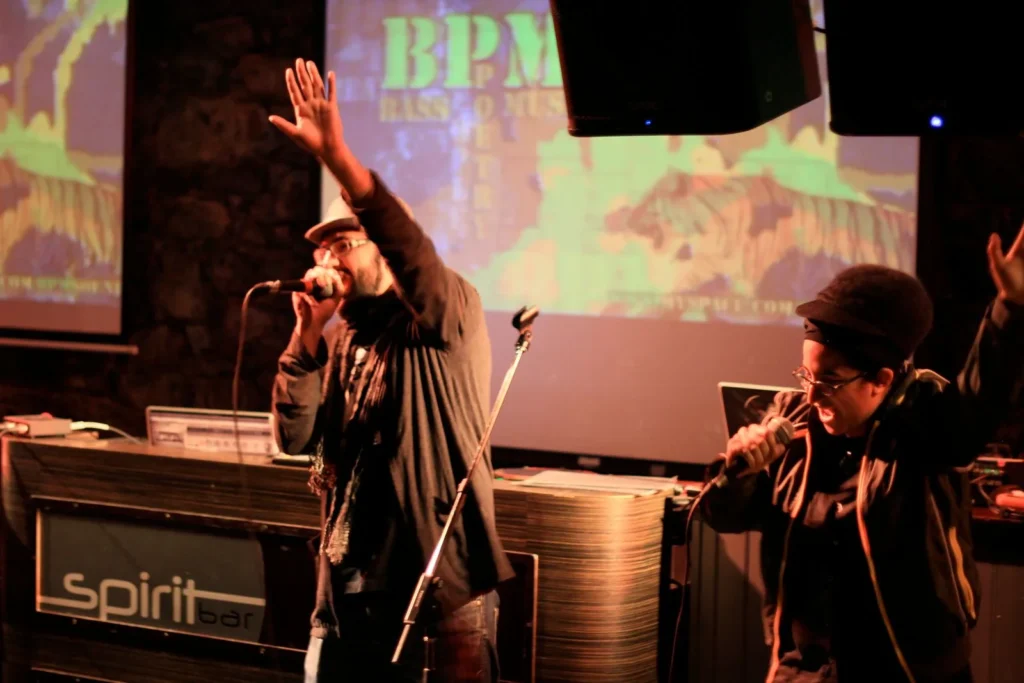
In 2009 I won a contest that was sent out by Roger Sinha of Sinha Danse in Montreal, while I was still living in Vancouver. It was a call for a long poem written on the Indian rhythms of the tabla, bols. I already knew how to do this thanks to my time making music with Tarun Nayar and Ruby Singh, in bands like Heds Hi and BPM. The poem became part of an interdisciplinary piece (video, dance, music, poetry) called Zeroes and Ones that Roger performed solo, and which he is in the midst of reimagining and remounting for the third time. Roger also was the first person to commission paintings from me, he gave me two big drums and asked me to paint whatever I wanted on them. He also introduced me to Khosro Behramandi at Festival Acess Asie, which was the very first seed of Indivisible.
Here’s an interview between Roger and I
And here’s me and Ruby at the Mercury Lounge in Ottawa in 2014, rapping on those Indian rhythms
When Khosro Behramandi first asked me to imagine something for the 2018 Festival Access Asie in Montreal, (which would eventually be produced by Farah Fancy at Le Groupe Herencias), my first thought was to somehow animate my automatic drawings. Eric Bent from Spectrum Productions came on as my mentor and he was so patient as I slowly learned to bring my vision to life. It took me two years to create Indivisible, with some incredible collaborators. My concept for Indivisible followed from my automatic drawing practice. I had learned that beautiful-ugly belonged to each other, with Indivisible I realized that all opposites are never apart.
The show consisted of 88 drawings that I animated, an original score in 5 acts by Ruby Singh and an original choreography by Julio Hong that brought to life the characters from my drawings. During the show, the audience were instructed to send me notes and text messages whenever they would have “unbidden thoughts.” With these I composed impromptu poetry which I read back to them during the show.
No one thought I could make the poetry pop on stage with whatever the audience gave me. In fact, at the final dress rehearsal Ruby and Julio tested me. They felt I had to have a backup text in case the audience didn’t give me what I needed. But I knew that if I was trying to judge when/if I needed to use that backup the whole show would fall apart. So we did it with full faith, a four night run at the iconic MAI theatre in Montreal, and it was beautiful. Opening night the audience refused to leave. “We need to talk about what just happened” someone in the back eventually said. It was a shattering of the fourth wall: the audience had co-written the
The process of creating Indivisible was very deep for me, partly because the images were always only meant to be my deep, personal psychic investigation, but also because to date it was the biggest scale project I had been involved with. I loved and hated every minute. This is the artist talk we did after the fourth show.
Since I was a teenager I’d dreamed of reading poetry at the Nuyorican Poets Cafe in New York City (basically the galactic centre of slam). I was in NYC with my dear friend Sean Harvey and we planned to go, but when the day came I was depressed and heartbroken and refused to go. But Sean insisted and somehow I pulled myself together. When we got there I was surprised by friends from long ago in the audience. When I read my poem, Coastline, I was fragile and open and… I won. I won the Words Matter slam at the Nuyorican that night. It taught me that anything is possible, even on the worst day.
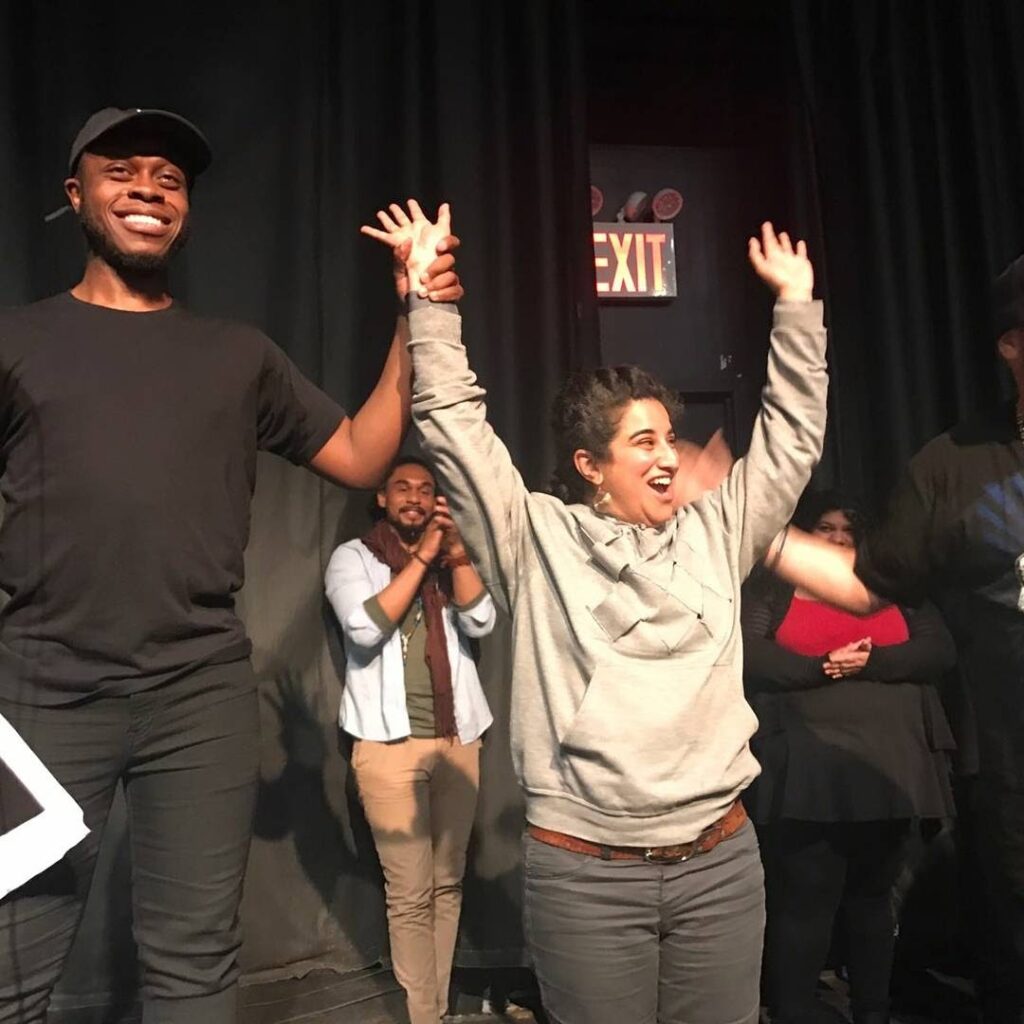
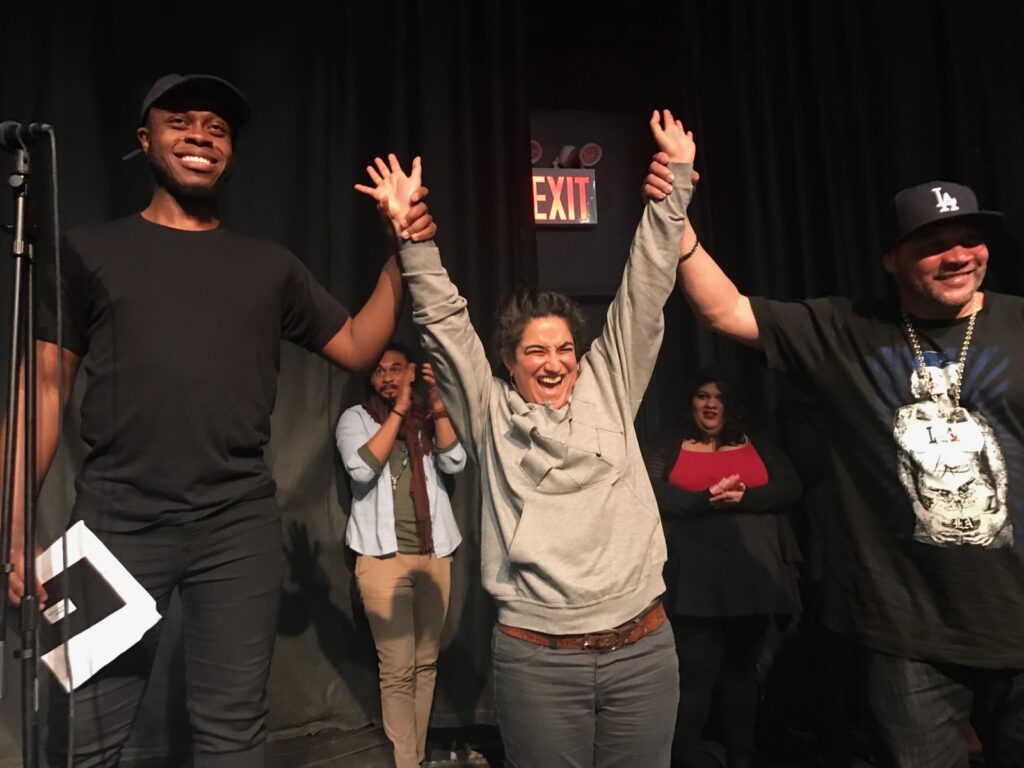
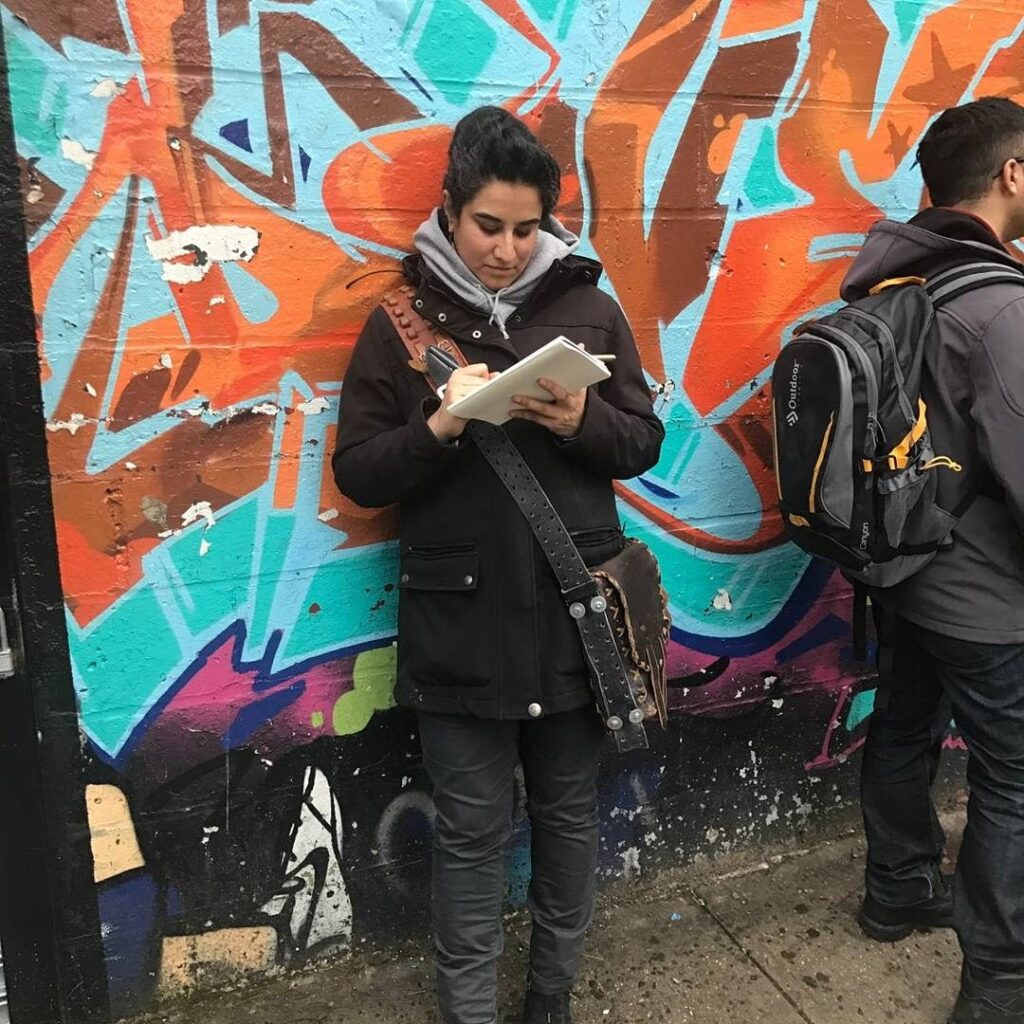
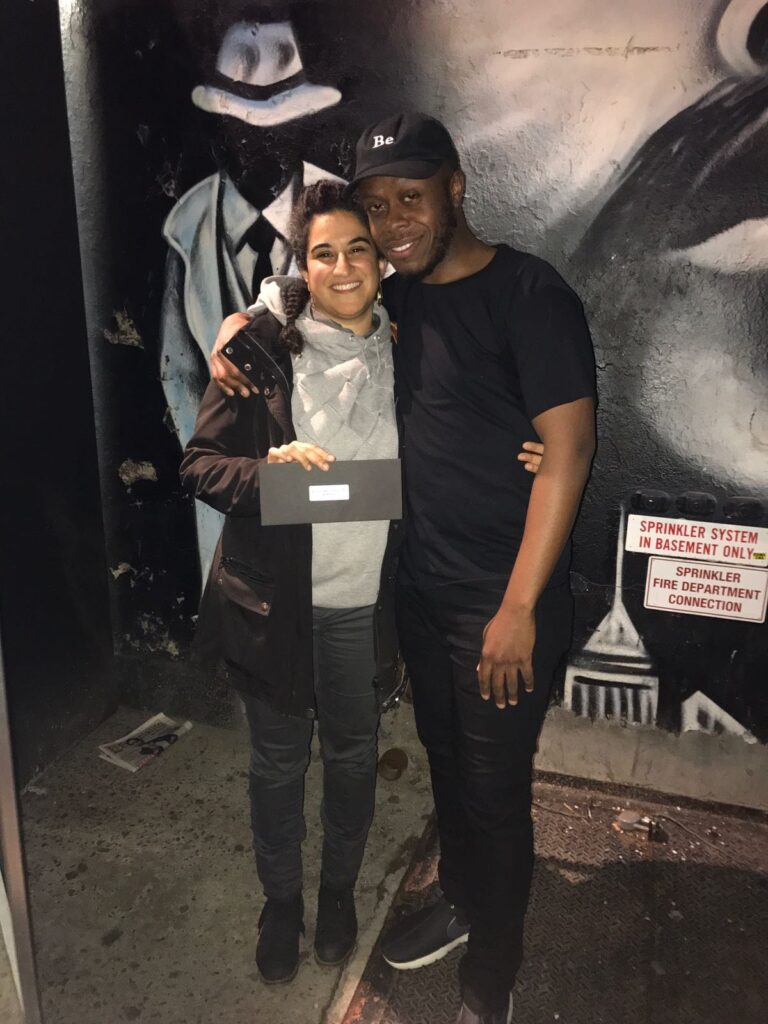
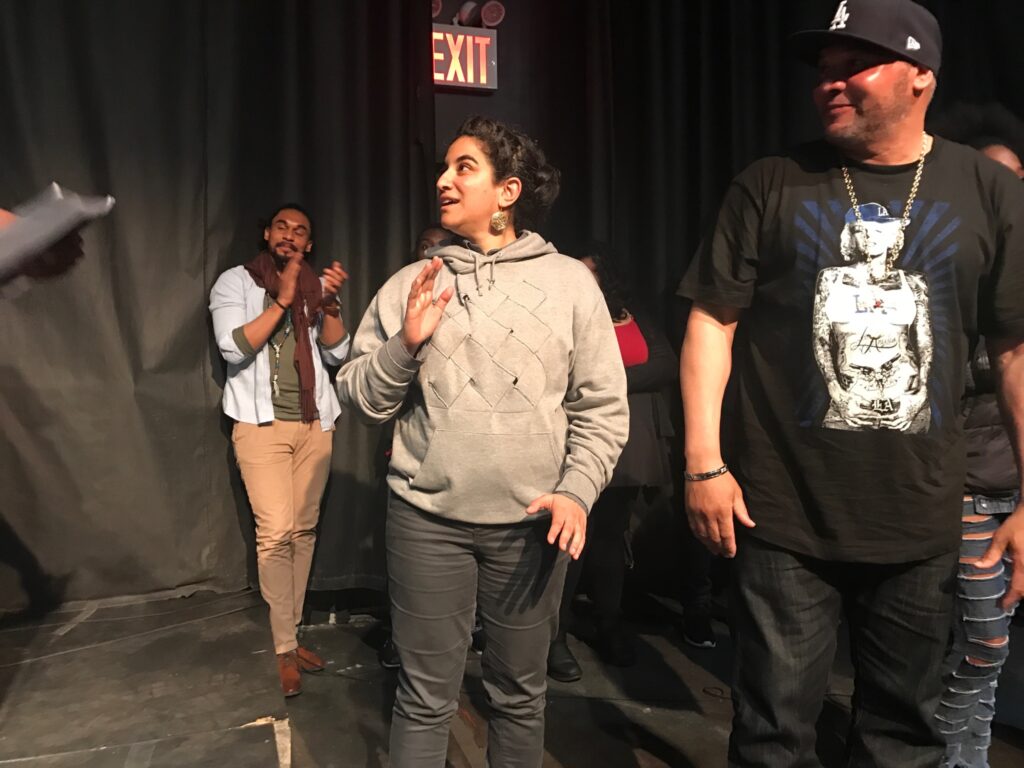
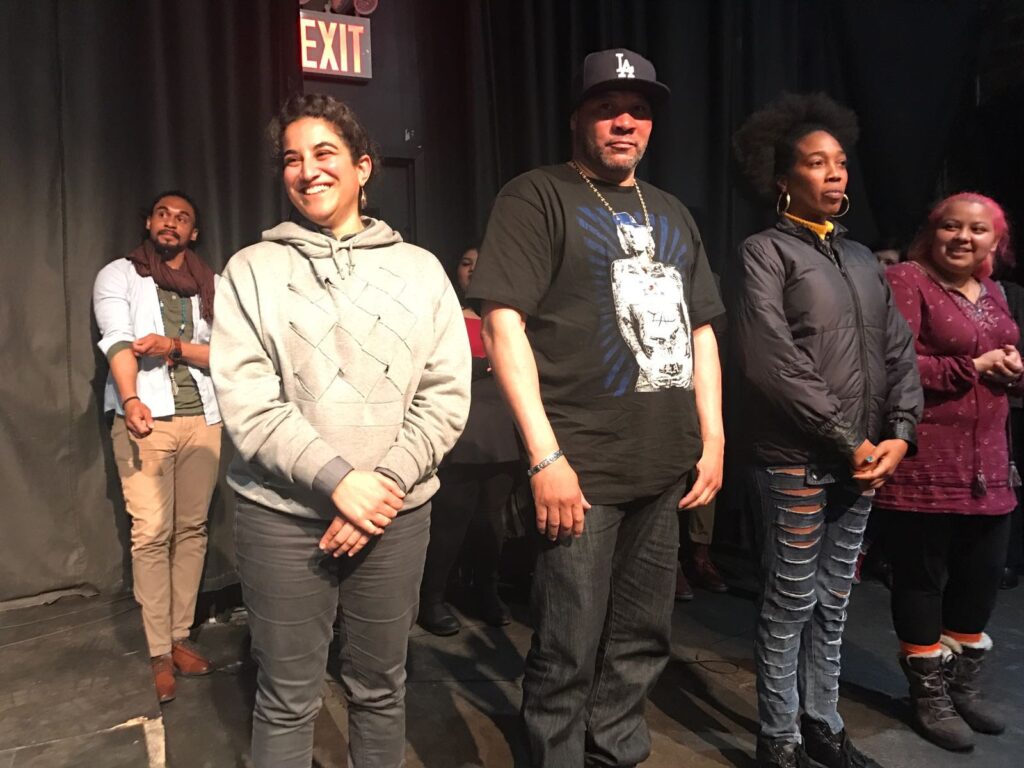
This win didn’t come out of nowhere! I started performing poetry and slamming and rapping in 2001. It was a community thing. I loved it. I loved rapping with Ruby Singh, Tarun Nayar and Raul Castelanos. I loved writing and singing with Sara Kendall and Maya Seuss. I loved the experimental and chaotic noise experiments with Freddy Brummer. I loved clowning as the Solitudes with Naomi Steinberg. We did hundreds of shows, from hip hop shows for kids to bhangra-hip hop fusion, to opening for D’bi Young and Michael Franti. 1998-2013 was an incredible tidal wave of creativity and performance for me. I could never name everyone I collaborated with, but I’m grateful for each and every one.
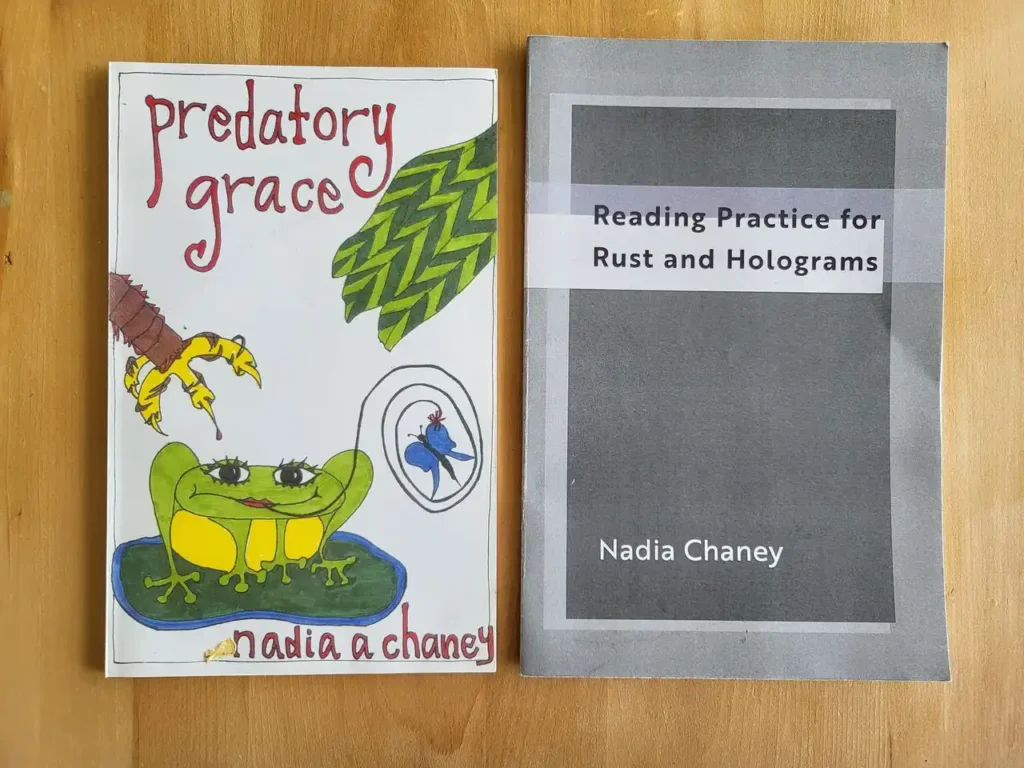
These are two of my chapbooks. There were two others that have been kind of lost in time. That’s the beauty of chapbooks, they wander off on their own. Reading Practice for Rust and Holograms won was edited by Darby Minott Bradford and published by House House Press and then won Best Literary Publication at the 2018 Expozine in Montreal.
Here I am in Uganda rapping at the National Theatre in Kampala with Abramz Tekya, the founder of Break Dance Project Uganda (I’m doing some lyrics I wrote with Ruby Singh)
Here’s a poem called Dundas Street Walking Poem I wrote with Erin Robinsong, walking all the way across Toronto and writing a line at every intersection:
And a poem published in Flycatcher Journal from 2015 about one of my earliest trips to Bangalore to work with Dream a Dream
Also in 2007 I got to be part of an amazing investigation, that partly inspired the Time Zone Research Lab, where a large group of intermodal artists were assembled to investigate the Schuman Resonances. Here I am at the New Forms Festival, reciting the piece I wrote, which is formed on the Fibonacci sequence. The themes and investigations of my work always have a deeper root than I realize in the moment. Like this, I’ll sometimes look back and realize that even when I’m making something new, the long threads of it have already been pulling me for a long time.
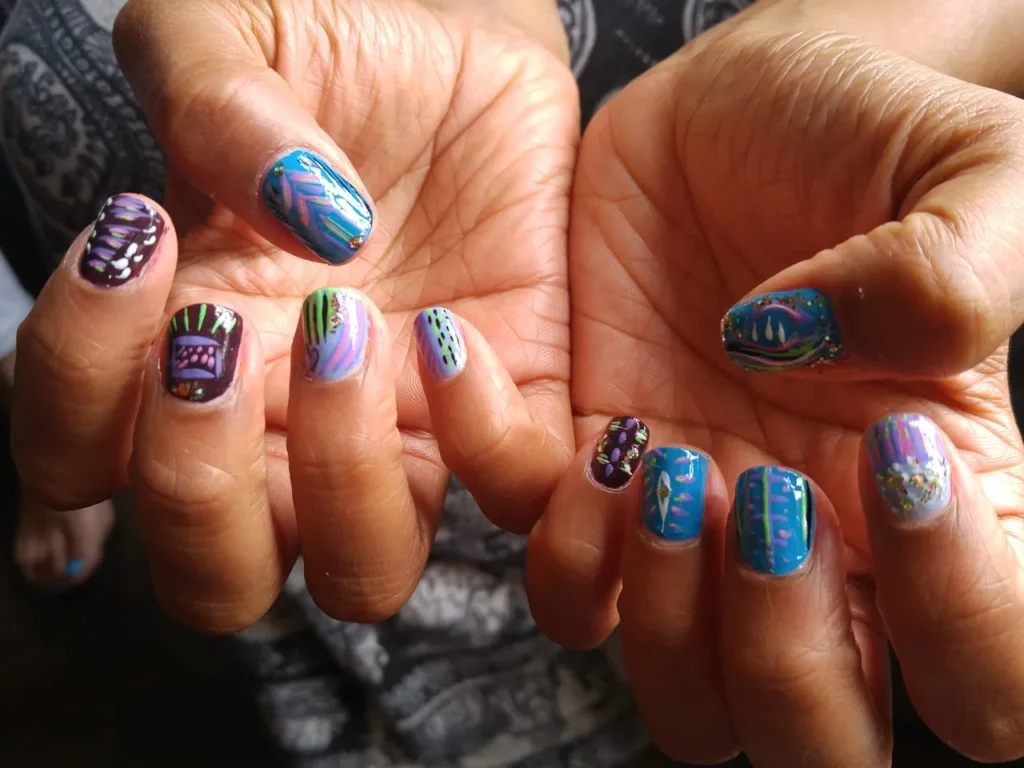
I love to work in collections and iterations. There was a period around 2014 where I became obsessed with art manicures, and would paint anyone’s nails who slowed down around me, especially those who had never painted their nails before. (These are my cousin Priya D’Souza’s hands)
During the Time Zone I started to paint in earnest, thanks to the encouragement of my friends D’Arcy Darwin Frost O’Connor and Melodie Kauff. During those 100 weeks I did 44 paintings (it was the pandemic) and then later showed half of those paintings at Lucki Delite on Ave du Parc in Montreal in 2023. That show, Ataraxia, included stories written while the paintings were being completed, by the brilliant Syilx storyteller, Jasin Wellons. You can see more of Ataraxia and hear those stories here.
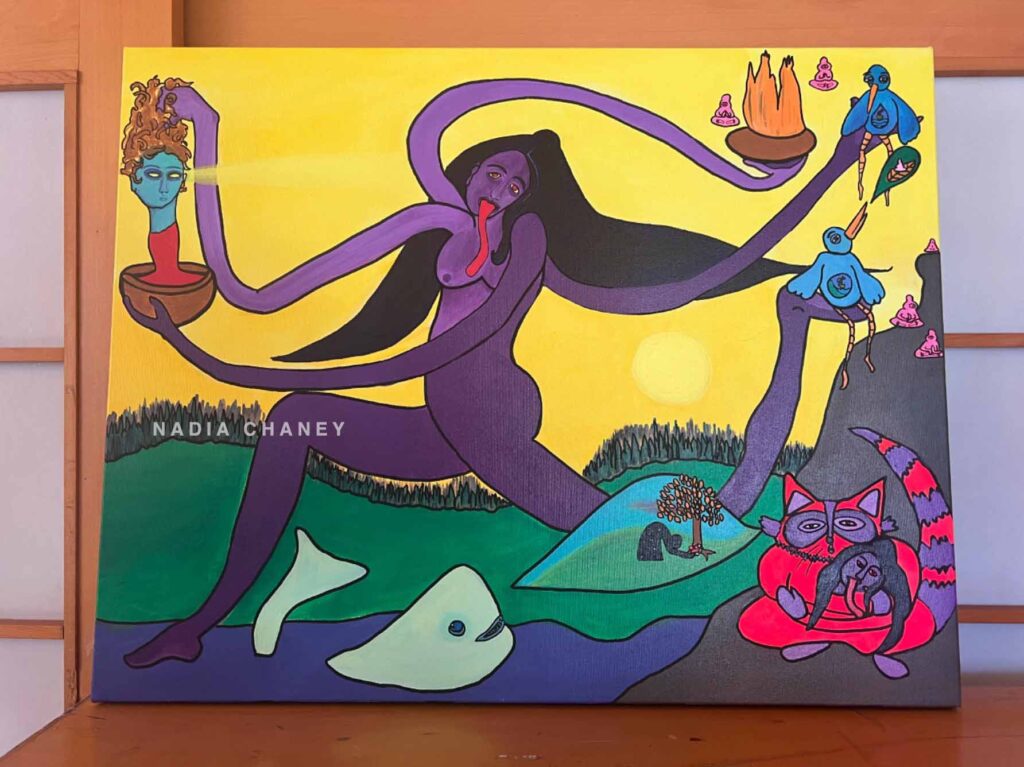
Most recently, since 2025 I have painted over 150 paintings of the goddess Kali. I’m including one here, a commission by my dear friend Michael Datura. More to come.
I could go on, and on. But I think that’s enough for now, the long, winding, embarrassing, terrifying and glorious life of making work-art-life.
Ataraxia
Unconditional serenity, to me, is not tranquility or calm. It’s the feeling of being swept along
effortless in the currents of time. That’s how these paintings arrive.
The stories that come to the observer are the ones that matter most to me. Here, the brilliant
Sylix storyteller Jasin Wellons is telling the stories of the images as he sees them,